Showing posts with label environment. Show all posts

Thursday, July 3, 2025

SM Supermalls elevates urban air quality

 There’s nothing quite like strolling through a mall with breathtaking views, expansive arcades, and lush greenery. At SM Supermalls, shopping isn’t just about transactions—it’s about enjoying spaces designed for comfort, sustainability, and a healthier environment. More than ever, SM’s commitment to green infrastructure is shaping urban air quality while creating a more livable city for everyone.

Designing for people and the planet

SM Supermalls prioritizes people-centric design, creating welcoming spaces that balance nature with modern convenience. The SM Mall of Asia’s arcades and the MOA Sky, for example, offer open, breezy walkways, encouraging leisurely strolls and even outdoor dining and entertainment. Meanwhile, SM Aura and SM North EDSA’s Sky Garden—the first in an SM mall—integrates lush vegetation and water features to reduce indoor heat, improve air quality, and create cooling effects in dense urban areas.
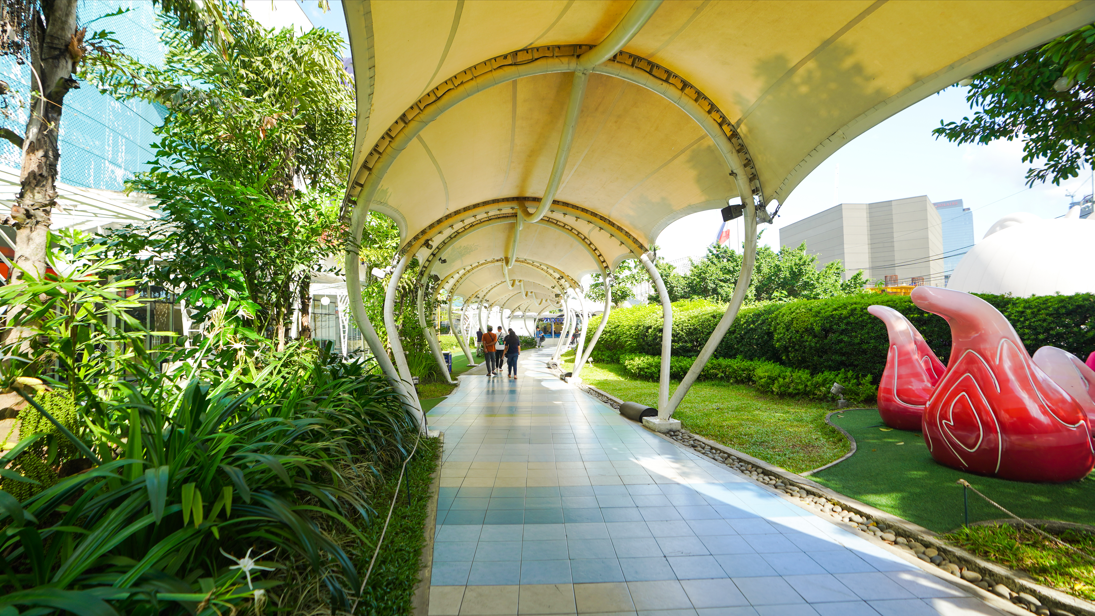
SM North EDSA houses the first Sky Garden in an SM mall, highlighting endemic plants and water features that bring nature onto a rooftop.


The SM MOA Sky showcases greenery and open-air spaces that promote cleaner, cooler urban living.

Championing bike-friendly cities

Beyond providing open spaces, SM Supermalls is leading bike-friendly initiatives, with over 5,000 bike parking spaces across its properties. Studies show that replacing short car trips with biking can cut carbon emissions by up to 90%, significantly reducing air pollution and its long-term impact on climate change.
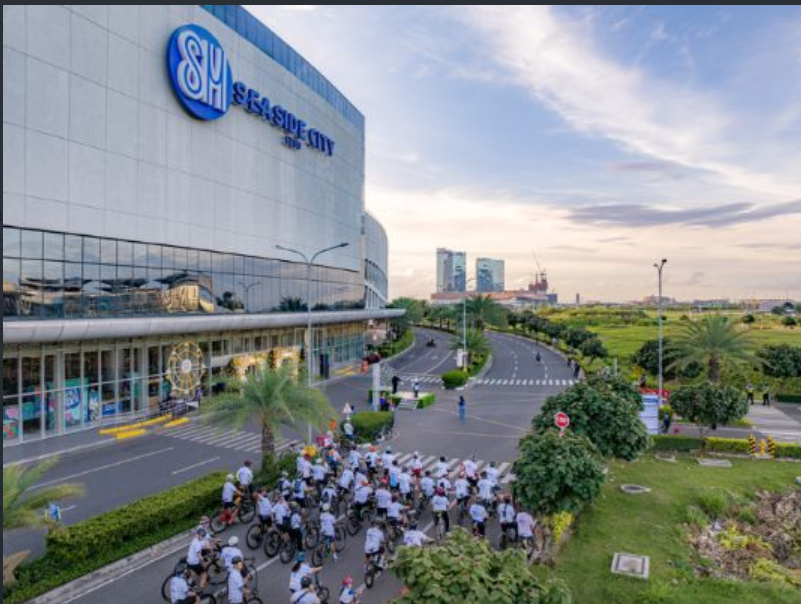
Cyclists gather at SM Seaside City Cebu, championing greener, healthier urban mobility.
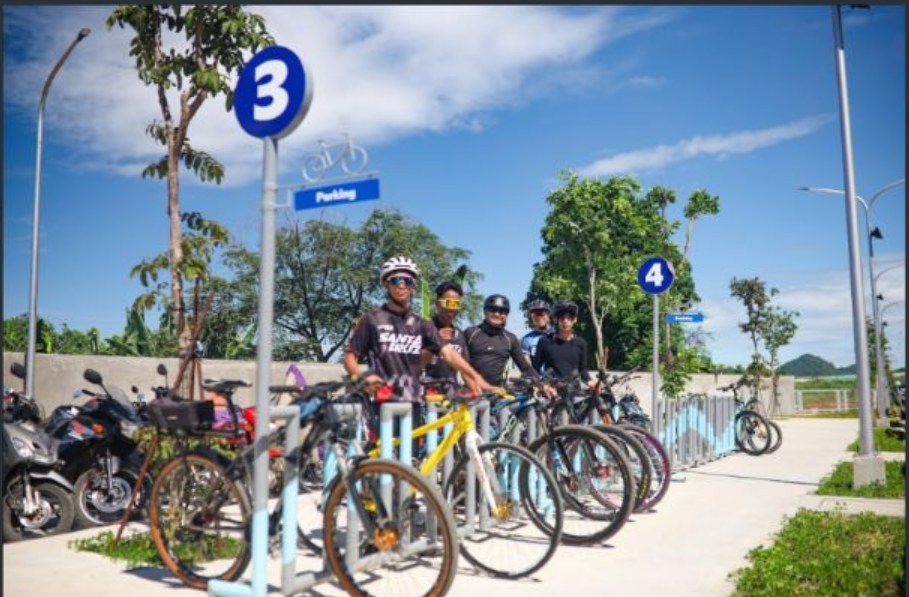
Bikers enjoy the convenience of secure parking as SM Supermalls champions eco-friendly transport solutions.

Greening malls with native flora

Additionally, select SM malls feature endemic plant species that enhance air quality and support local biodiversity, filtering pollutants while creating a natural habitat for urban wildlife. These green spaces are designed not just for aesthetics but to actively contribute to a healthier environment.

Making public transport more convenient

To make sustainable transport more accessible, SM Supermalls operates transport terminals that support public transportation, providing seamless connections to buses, jeepneys, and other modes of transit. These terminals encourage commuters to opt for public transport, which can significantly reduce individual carbon footprints and traffic congestion, contributing to cleaner air and more efficient urban mobility.

Powering the shift to EVs

Recognizing the need for cleaner transportation, SM Supermalls has also installed Electric Vehicle Charging Stations (EVCS) in 69 malls nationwide. By providing essential infrastructure for electric vehicles, SM is helping to lower carbon emissions and reduce reliance on fossil fuels—a crucial step in improving urban air quality. Studies indicate that EVs produce up to 60% less greenhouse gas emissions compared to traditional gas-powered vehicles, making them a key solution for reducing pollution in crowded city centers.

Monitoring air, empowering communities

SM’s commitment to sustainability extends to air quality monitoring, ensuring that urban pollution levels are tracked and addressed. Under SM Prime Holdings, the company partnered with Quezon City to establish an air quality monitoring system that records environmental data and provides updates through a publicly accessible website. This initiative allows communities to stay informed while encouraging long-term strategies for a cleaner, healthier urban space.
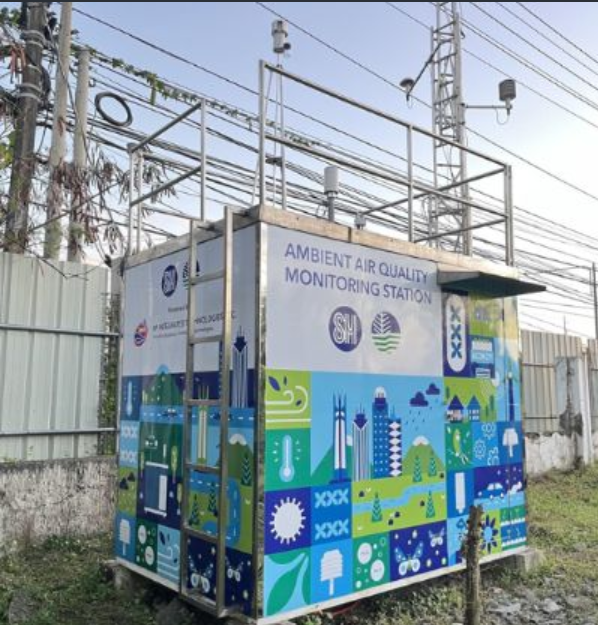
SM Supermalls monitors air quality in real time, empowering communities with data for cleaner, healthier cities.


A greener future for urban living

From green roofs and bike-friendly amenities to EVCS and air quality monitoring, SM Supermalls is redefining retail spaces with a deeper environmental purpose. Every visit to an SM mall contributes to a better urban future, where sustainability and innovation go hand in hand.


40 years of building better communities

Celebrating 40 years of serving communities, SM Supermalls continues to lead as a shopping and lifestyle destination in the Philippines. True to its legacy, SM remains at the forefront of environmental sustainability through pioneering waste, water and energy innovations as well as disaster resilience initiatives.


Monday, August 26, 2019

Buy this, not that: Small switches for eco-friendly shopping

Do you know that 2019 has so far been the year everyone was being encouraged to do their part in saving the planet from pollution and waste?


While there are many new and trendy ways to save the planet, one tried and true practice any eco-noob can start with is shifting to eco-friendly shopping—and this doesn’t just mean bringing reusable shopping bags to the grocery.

It starts with what you buy
So let’s say you’re on your way to being an environment-friendly shopper, how do you know which products will complement your new lifestyle? After all, what you put in your grocery cart matters and where it came from matters just as much.

One easy choice would be products with packaging that produce less waste, can be recycled, and took less energy and resource to make or re-use.

Groceries in glass packaging could be number one on your list because glass is 100% recyclable and can be recycled over and over endlessly without compromising its quality. Another great thing about glass is when it’s recycled, it doesn’t cost manufacturers much resources or energy to re-use it, all they have to do is wash and reload and they’re good to go!

Sharing glass packaging’s endlessly-recyclable quality is aluminum cans—hailed as the most sustainable beverage container and valuable package even when thrown away. Apart from also being 100% recyclable, the lightweight aluminum packaging of your favorite sodas are easy to stack and transport, limiting overall transportation carbon emissions.

Apart from these, products in recycled carton packaging and high-value plastic are great choices too. Now before you completely write off plastic from your life, you have to know that not all plastic packaging are created equal. Despite being a mouthful to say, Polyethylene Terephthalate (PET) is a really good, highly-recyclable type of plastic prized for its strength, stability even when heated, and transparency. PETs can be recycled back into its bottle form and can be upcycled into lots of stable resilient stuff like furniture and even walling.

And to double down on PET’s high value, manufacturers like Pepsi-Cola Products Philippines Inc. (PCPPI) have started “lightweighting” their PET bottles, which diverts solid waste from ending up in landfills by using less material to make each bottle. This results in “lighter” PETs that feel thinner yet still sturdy, not compromising the quality of the product it houses, to date Pepsi’s local bottling firm has reduced plastic resin in its packaging by 863.4 metric tons (MT).

In fact, PCPPI has effectively lightweighted its other packaging materials for beverages like glass—available at sari-sari stores and carinderias—and carton, effectively reducing material for glass by 6,467.5 MT and carton by 921.35 MT which make them doubly environmentally-friendly.

Where did they come from?
Another criteria you can use to choose your products could be knowing where they were made.

Compared to swanky imported products, locally made and manufactured goods spell G-O-O-D not just for local producers but for the environment as well.

Local businesses utilize resources within their reach from sourcing to manufacturing and production. Aside from benefitting local farmers and workers, businesses close to your neighborhood will produce less carbon emissions when it comes to transporting their goods, and this doesn’t just apply to small businesses.

Even big businesses, with their recent pledges to save the environment, emit less pollution with their deliveries by opening manufacturing hubs nationwide while maximizing delivery routes to transport their goods. Less trips, mean less fuel consumption and less carbon emissions.

PCPPI is also contributing to this cause by getting the most done in their deliveries by getting bigger trucks that use less fuel to transport more products to any partner outlet and sari-sari store close to any of their 13 plants nationwide.

With these easy considerations, supporting the environmental movement doesn’t need to be complicated to do. The environment will need all the help it can get and there’s definitely more work to be done, but these small steps can help build sustainable habits for everyone until we can all start pitching in big. Not only that, these simple choices also help support and encourage companies like PCPPI to continue their sustainable  efforts. Anyone can pick up better-packaged products in the grocery, and with manufacturers like PCPPI improving on their packaging, switching up your shopping won’t be hard at all.

Friday, May 11, 2012

Kraft Foods wins Global CSR Award ‘Go Green’ Program Recognized for Saving Water and Energy


‘Go Green,’ Kraft Foods Philippines’ (KFP) program to help save water and energy and reduce carbon emissions was given the Gold Award for Environmental Excellence at the 4th Global CSR Awards 2012

Kraft Foods Philippines’ Gold Award for Environmental Excellence was handed by Hon. Mayor John Yap of Malay, Aklan (center) and Atty. Michael Frederick Musngi (right) Undersecretary for Special Concerns of the Office of the Executive Secretary, The Office of the President of The Philippines, to the Company’s Communications Officer Caitlin P. Punzalan (left) during the 4th Global CSR Awards. 


Held April 19, 2012 in Boracay, the Global CSR Awards prides itself as Asia's most prestigious recognition awards program for corporate social responsibility (CSR). The Awards Program is organized by The Pinnacle Group International based in Singapore and recognizes companies for outstanding programs, which demonstrate ongoing commitment to respect for individuals, communities and the environment in the way they do business. 

This is the 5th award that Kraft Foods has received for its ‘Go Green’ program in two years. Kraft Foods aims to help in the preservation of the environment by ensuring that reducing, recovering and recycling precious resources is part of its business. ‘Go Green’ is aimed at reducing Kraft Foods’ use of water and energy and lessening its carbon emissions. One way which Kraft Foods helps Mother Earth through ‘Go Green’ is the recent upgrading of its water recycling facility.


In March of this year, Kraft Foods inaugurated its improved water recycling facility for its Sucat, Parañaque manufacturing plant. This upgraded facility utilizes reverse osmosis and ultraviolet light to treat the water that Kraft Foods uses in its production activities.  
To ‘treat’ means to remove impurities the water has acquired through use. The goal of treating is to ensure that the water returns as close as possible to its natural state. By treating the water it has already used, Kraft Foods is able to use less fresh water and help in preserving this natural resource. 

“I am personally very pleased to share that with this improvement initiative, Kraft Foods will be able to make a significant reduction to its water consumption,” says Sudip Mall, Kraft Foods Philippines’ General Manager. The amount of water that Kraft Foods hopes to reduce with this new facility is equivalent to filling up 4 Olympic-sized swimming pools or 581,000 5-gallon containers of water! 

Inauguration improved water recycling facility for its Sucat, Parañaque Plant.

He continues, “Our programs like ‘Go Green,’ don’t just make sense for our business. We also work to protect resources for future generations. I would like to add that it is truly remarkable the way our employees have relentlessly focused on driving our environmental initiatives, of which this facility is an example. We are very proud of the award bestowed upon us and this new phase of our program for the planet’s betterment.”  
Making every drop reusable. For many years, Kraft Foods has had a wastewater recycling program inside its plant. Before, the water the Company treats was used only for watering plants or other maintenance tasks. This new facility ensures the treated water can be used for much more. 

This is because this specific process ensures that the treated water meets the high quality standards that Kraft Foods needs for its manufacturing activities. Instead of using fresh water to clean inside its production area, the treated water is now used instead.  

“We have been a community partner of Parañaque for almost 50 years, since our plant opened in 1963,” shares KFP’s Operations Director Gautam Pal. “This improved water recycling facility is another way of helping our community. By using less water, and using it smartly, we are able to contribute to our community’s efforts to save our water resources.”  

In the future, Kraft Foods is looking at installing biomass boilers, or those, which use alternative energy sources, to reduce its carbon footprint even more. To find out the other ways Kraft Foods makes today delicious, visit www.kraftfoods.ph